


FIRE BIRD
In the Aso region of Kumamoto Prefecture, Japan, 50,000 people live in a huge
caldera created by an eruption 90,000 years ago. The grasslands there, the largest
in Japan, are the source of spring water and fertilizer, and food is produced in the
rice paddies and fields, all of which form a cycle of human activity. The grasslands
have been used as grazing land for at least 1,000 years.
In recent years, however, it has become increasingly difficult to maintain those
grasslands, either by grazing cattle or foraging for fodder, or by burning the fields,
and the symbiosis with nature that maintains the balance is at a crossroads.
The area is also prone to natural disasters such as floods and volcanic eruptions,
as in the case of the Kumamoto earthquake in 2016. Nature provides both benefits
and damage to humans. Humans are part of that nature, kept alive, and walk
through life accepting that. For at least 1,000 years, the people of Aso have lived in
harmony with nature, which sometimes destroys them.
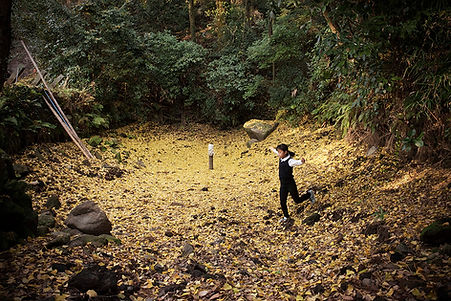
'’FIRE BIRD” is a visual representation of the symbiosis between people and nature
in Aso.